We evolved in nature — surrounded by light, plants, water, stone and living things. Modern urban life has severed that connection almost completely, and research consistently shows it's making us less healthy, less creative and less happy. Biophilic design is the intentional practice of restoring that connection inside the spaces we inhabit. In Delhi NCR's dense, concrete-heavy environment, it is no longer a luxury — it's a necessity.
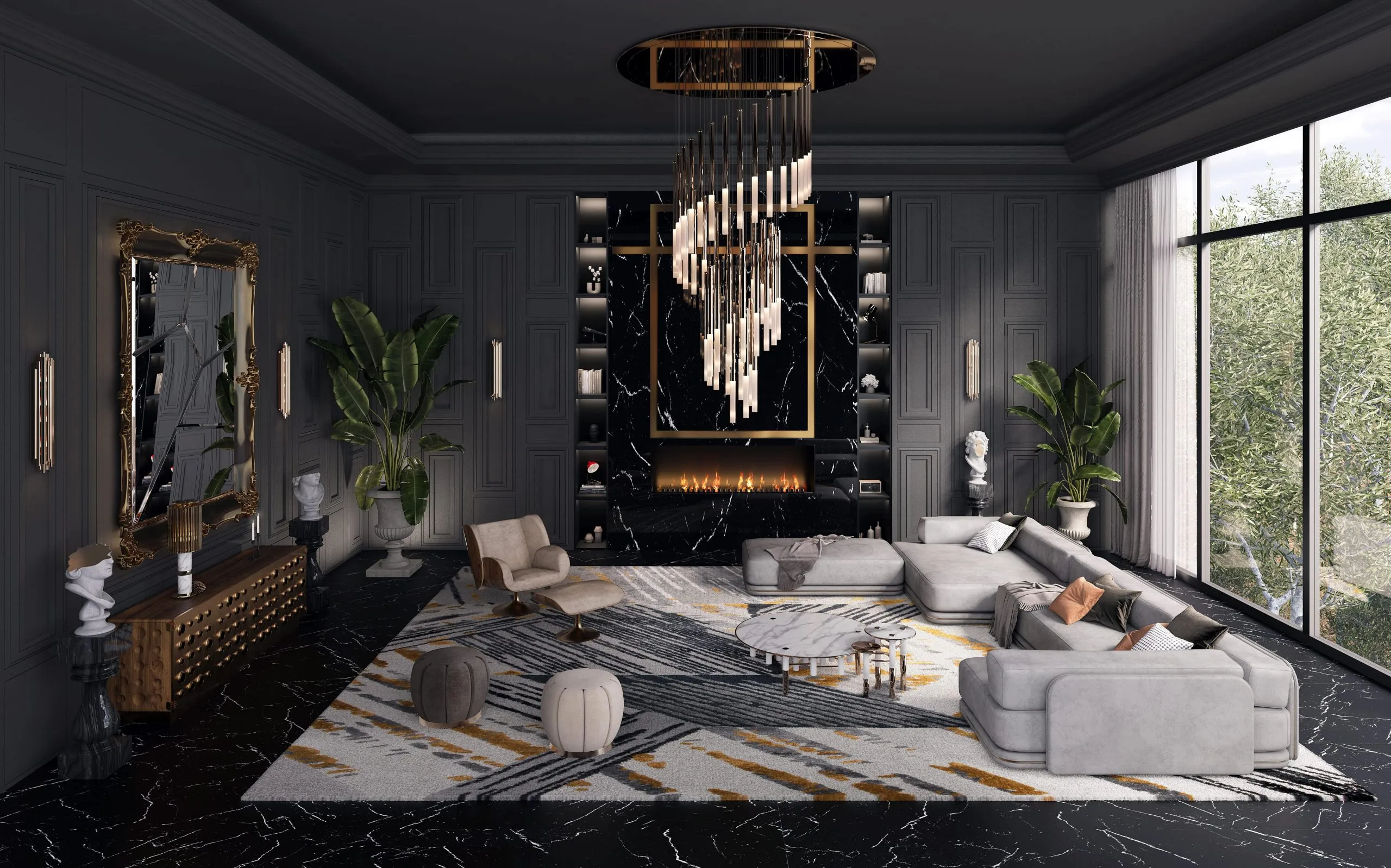
Biophilic living room in Delhi NCR — botanical wall art, gold ambient lighting, organic textures and dark marble grounding elements
What Is Biophilic Design?
Biophilic design is the practice of incorporating nature — its materials, patterns, light, sounds and living systems — into built environments. The term comes from biologist E.O. Wilson's "biophilia" hypothesis: that humans have an innate, biological affinity for nature.
Unlike simply adding houseplants, biophilic design is a holistic design philosophy that encompasses everything from spatial layout and material selection to lighting quality and the sounds a space makes. A well-executed biophilic interior triggers measurable physiological responses: lower cortisol, lower heart rate, faster stress recovery, improved concentration and mood.
14 Patterns of Biophilic Design
Researchers Browning, Ryan and Clancy identified 14 core patterns of biophilic design. Here are the most impactful ones for residential interiors in Delhi NCR:
Indoor Plants — The Foundation Layer
Plants are the most accessible starting point for biophilic design. Beyond aesthetics, they filter VOCs from the air, increase relative humidity (critical in Delhi's dry winters) and reduce background noise through sound absorption. Here's a practical guide for Delhi NCR conditions:
| Plant | Light Need | Care Level | Best Placement | Benefit |
|---|---|---|---|---|
| Peace Lily | Low light | Easy | Bedroom, bathroom | VOC removal, air purification |
| Snake Plant | Any light | Very easy | Bedroom, corridor | Releases O₂ at night, drought tolerant |
| Pothos | Low-medium | Very easy | Any room, trailing | Fast growing, forgiving, lush visual |
| Fiddle Leaf Fig | Bright indirect | Moderate | Living room corner | Statement plant, strong visual anchor |
| Bird of Paradise | Bright indirect | Moderate | Large living spaces | Dramatic tropical look, statement piece |
| ZZ Plant | Very low | Very easy | Office, dark corners | Near indestructible, glossy dark leaves |
| Areca Palm | Bright indirect | Easy | Living room, foyer | Natural air humidifier, tropical feel |
A vertical living wall (moss wall or planted wall system) is the highest-impact biophilic element per square foot. For a 4×6 ft section in a living room or reception, expect ₹25,000–₹60,000 installed. Preserved moss walls require zero watering and no sunlight — ideal for interior walls away from windows.
Natural Materials — Bringing Earth Inside
Biophilic design extends well beyond plants. The materials you use communicate "natural" to the brain even without living elements:
- Solid wood: Oak, walnut, teak — real wood responds differently to touch and light at different times of day. Its grain patterns contain the fractal geometry the brain associates with nature. Avoid MDF/HDF wherever budgets allow.
- Natural stone: Marble, granite, limestone and slate have irreplaceable visual depth. Variation in stone patterns creates the "organised complexity" that makes natural environments so visually restful.
- Rattan and cane: Lightweight, textural, deeply associative of tropical nature. Rattan chairs and pendant shades are among the most effective biophilic accents available at accessible price points.
- Linen and cotton textiles: Natural fibre textiles — linen cushions, cotton curtains, jute rugs — introduce softness, texture and warmth that synthetic fibres don't replicate.
- Terracotta and clay: Handmade terracotta planters, ceramic vessels and clay wall tiles carry the warmth of earth. Their slight imperfections are features, not flaws.
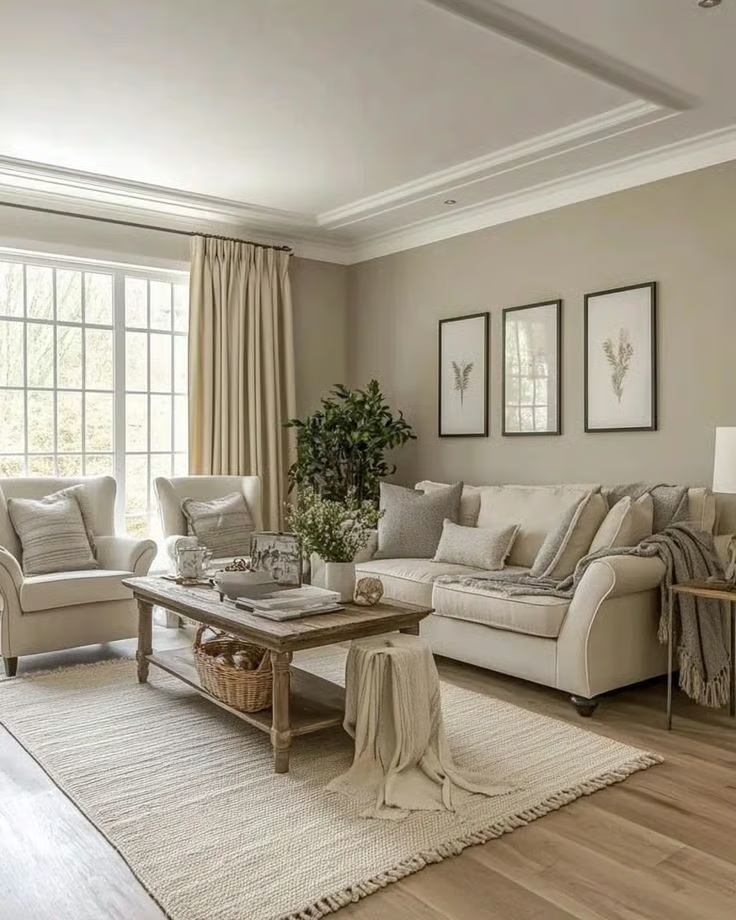
Biophilic living space in Faridabad — cream slipcovers, reclaimed wood coffee table, botanical wall prints, linen textures and lush indoor plants
Natural Light — The Most Powerful Biophilic Tool
Natural light is the single most powerful biophilic element in any interior. It connects occupants to the passage of time and seasons in a way no artificial light can replicate. In Delhi NCR's sunny climate, maximising daylight should be the first priority of any renovation:
- Remove internal partitions that block light flow between rooms wherever structurally possible. Open-plan kitchens, light-wells and double-height spaces all dramatically improve natural light quality.
- Light shelves and reflectors: White-painted walls near windows act as natural light reflectors. Horizontal shelves above windows bounce daylight deeper into a room.
- Skylights: In terrace apartments, a single rooflight transforms the floor below. Fixed skylights require no mechanical systems and provide direct overhead daylight — the most circadian-supportive light angle.
- Sheer curtains vs blinds: Replace heavy block-out curtains in living areas with sheer linen. The filtered light quality is far more biophilic than darkness punctuated by a switched ceiling light.
Water Features — Sound as Biophilia
The sound of moving water is one of the most reliably stress-reducing sensory stimuli. Studies show it reduces cortisol levels within 3 minutes of exposure. Options for Delhi NCR homes:
- Tabletop fountains: ₹3,000–₹15,000. Perfect for desks, bedside tables or a foyer console. Simple recirculating pump, stone or ceramic bowl, a few smooth pebbles.
- Wall-mounted water features: Slate tile or copper panel water walls. Suitable for feature walls in reception areas, living rooms, or corporate lobbies. ₹40,000–₹2,00,000 depending on size.
- Garden courtyard fountain: For independent floors or villas, a courtyard water feature audible through open windows provides continuous biophilic benefit to multiple rooms.
Biophilic Colour Palettes
Colour palettes drawn from nature are inherently biophilic. They communicate familiarity and safety at a subconscious level:
- Forest floor: Moss green, bark brown, stone grey, dappled ochre. Grounding, earthy, calming. Ideal for living rooms and bedrooms.
- Coastal: Sand, driftwood, ocean blue, sea glass green, white. Expansive, light-filled, refreshing. Works beautifully in kitchens and bathrooms.
- Desert: Terracotta, warm sand, dusty rose, clay red. Warm, enveloping, deeply textural. Particularly appropriate for Delhi NCR where landscape references are arid.
- Canopy: Deep forest green, emerald, botanical illustration-inspired botanical prints. Dramatic but nature-grounded — ideal as feature wall colour or upholstery choice.
In Delhi's urban environment, dust and pollution make plants a more practical biophilic priority than natural ventilation. Focus on air-purifying species (peace lily, snake plant, pothos), sealed natural material surfaces (stone countertops, solid wood joinery), and layered artificial lighting that mimics daylight's warm-to-cool progression.
Biophilic Design for Delhi NCR Apartments
Most NCR residents live in multi-storey apartments with limited outdoor access. Here's a practical hierarchy of biophilic interventions from easiest to most transformative:
- Tier 1 (₹5,000–₹20,000): Indoor plants (6–10 pots), botanical prints, natural fibre cushions and rugs, a tabletop water feature, sheer linen curtains.
- Tier 2 (₹20,000–₹80,000): Statement indoor tree (fiddle leaf fig or bird of paradise), preserved moss wall section, rattan light fittings, solid wood accent furniture, natural stone bathroom surfaces.
- Tier 3 (₹80,000+): Full living wall system, skylight addition (terrace flat), natural material joinery replacement (solid wood over MDF), smart lighting system with circadian programming, interior water feature.