Most bedrooms in Delhi NCR suffer from the same lighting mistake: a single overhead light doing all the work. The result is a flat, shadowless room that never quite feels like the intimate sanctuary a bedroom should be. Layered lighting — the professional technique of combining three distinct light types — transforms a room the way a single gesture can transform a face.
What Is Layered Lighting?
Layered lighting is the deliberate combination of three functional layers — ambient, task and accent — each served by different fixtures at different heights and intensities. The result is a room that can be dialled between multiple moods throughout the day, from bright and energising in the morning to intimately warm for evening winding-down.
Ambient Layer — Foundation Illumination
The ambient layer provides general illumination that makes the room functional. In a bedroom, you want ambient lighting to be dimmable — the ability to lower ambient light is the single most transformative upgrade you can make to a bedroom lighting scheme.
- Ceiling fixtures: Avoid harsh downlights directly above the bed — they shine directly into your eyes when lying down, a deeply uncomfortable experience. Use pendant lights, flush mount domes or a central decorative fixture instead.
- Cove lighting: LED strip lights concealed in a ceiling cove or cofferred ceiling recess produce beautiful, even, glare-free ambient light. For a 12×14 ft bedroom, a 3000K warm white LED strip at 14W/m provides perfect ambient levels when dimmed.
- Indirect uplighting: Floor lamps directed at the ceiling bounce soft, diffused light throughout the room — the most flattering ambient technique for both rooms and people.
Every bedroom ambient light must be on a dimmer switch. No exceptions. The cost is ₹800–₹2,500 per switch. The quality-of-life improvement is extraordinary — it's one of the highest-return investments in bedroom design.
Task Layer — Light Where You Need It
Task lighting in a bedroom serves three primary functions: bedside reading, dressing/wardrobe, and vanity/makeup. Each deserves its own lighting solution:
Accent Layer — Drama and Depth
Accent lighting is what separates a designed bedroom from a merely lit one. It creates visual depth, draws the eye to beautiful features and adds the warm luminosity that photography — and lived experience — captures as "atmosphere".
- Bedhead / headboard lighting: A concealed LED strip behind an upholstered headboard or a light sculpture wall panel creates a glowing halo effect that immediately reads as luxurious. Use 2700K amber-warm for maximum intimacy.
- Under-bed lighting: A thin LED strip under the bed frame creates a floating illusion and provides practical night-navigation lighting at a very low output level (5W/m maximum).
- Artwork lighting: A picture light or adjustable track/rail with a spotlight directed at a piece of art transforms it from decoration to focal point.
- Architectural highlighting: Recessed wall washers or narrow-beam spotlights grazing a textured wall — exposed brick, fluted wood panelling, Venetian plaster — reveal depth and materiality invisible under general lighting.
- Decorative table lamps: The bedside table lamp serves double-duty as task (ambient boost) and accent (sculptural object). Choose warm-toned shades — linen, cream, amber — that cast golden light rather than stark white.
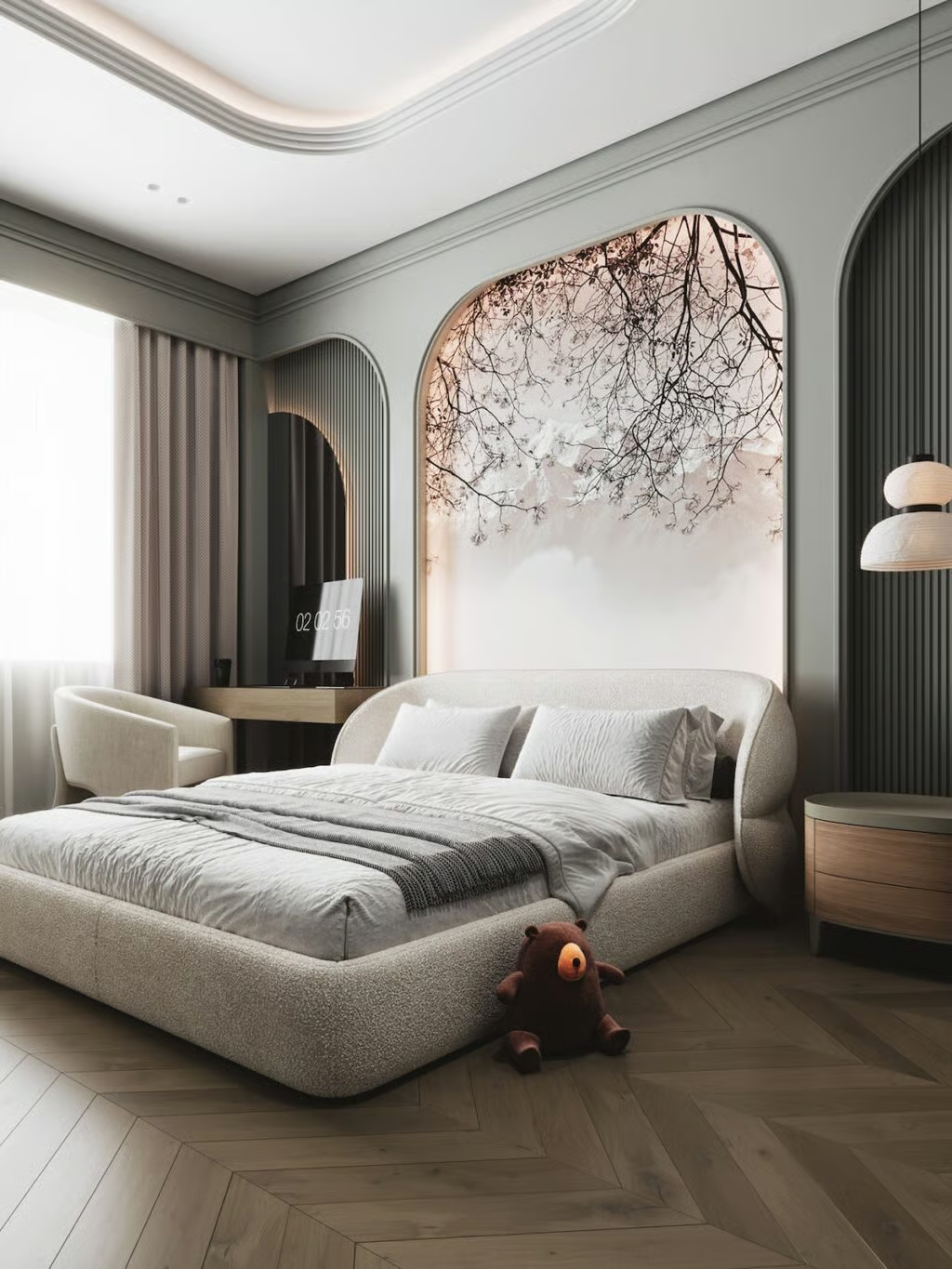
Layered lighting in a master bedroom, Faridabad — ambient cove behind arched alcove, warm 2700K bedside pendants, accent glow on botanical mural
Colour Temperature — The Mood Dial
Light colour temperature, measured in Kelvin (K), is the most underspecified variable in residential lighting. Most general lighting in India defaults to cool white (6500K) — optimal for warehouses and hospitals, catastrophic for bedrooms.
| Temperature | Colour | Use in Bedroom | Effect |
|---|---|---|---|
| 2700K | Warm white/amber | Ambient, accent, bedside table lamps | Relaxing, intimate, melatonin-friendly |
| 3000K | Soft warm white | Bedside reading, cove ambient | Warm without orange tint, good for reading |
| 3500K | Neutral warm | Dressing area, vanity side lights | Natural, balanced — good colour rendering |
| 4000K | Cool white | Wardrobe interior, study corner only | Alert, accurate colour — not for bedtime zones |
| 6500K | Daylight | Avoid in bedrooms | Suppresses melatonin, inhibits sleep onset |
Smart Lighting — Automation for Wellbeing
Smart lighting systems (Philips Hue, Lutron Caséta, Wiser) add a fourth dimension to layered lighting: time-aware automation. This is no longer a luxury feature — circadian lighting genuinely improves sleep quality and morning alertness.
- Wake-up scene: Lights gradually increase from 0% to 60% over 20 minutes before your alarm, mimicking dawn and making waking feel natural rather than abrupt.
- Evening wind-down: After 8pm, lights automatically shift to 2200K amber tone and 30% brightness. This supports melatonin production and sleep onset.
- Reading mode: A single button or voice command activates bedside lamps at reading brightness (60–70%) while switching off all other bedroom lights.
- Night mode: Motion sensor triggers under-bed LED at 2% (just enough to navigate) — eliminates phone-screen checking during night-time bathroom trips.
You don't need a full smart system for circadian benefits. A simple mechanical dimmer + two warm 2700K bulbs + a quality bedside lamp costs under ₹4,000 total and delivers 80% of the bedroom lighting transformation that a ₹40,000 smart system does.
Planning Your Scheme — Step-by-Step
Here's how Decorette approaches a bedroom lighting design from scratch:
- Map activities: List every activity that happens in the room (sleeping, reading, dressing, makeup, working, watching TV, exercising). Each needs appropriate light.
- Plan circuits: Group lights into circuits that make sense for how you use the room. Minimum: ambient / task / accent as three separate circuits.
- Specify fixtures early: Lighting fixtures must be specified before the electrician starts — conduit routes, junction box positions and switch plate locations must be determined before plastering.
- Choose dimmers first: Select the dimmer switch type (trailing edge for LED, leading edge for halogen) before choosing bulbs to ensure compatibility.
- Test colour temperature: Buy single bulbs in 2700K, 3000K and 3500K and live with them for a few days before specifying the whole room.